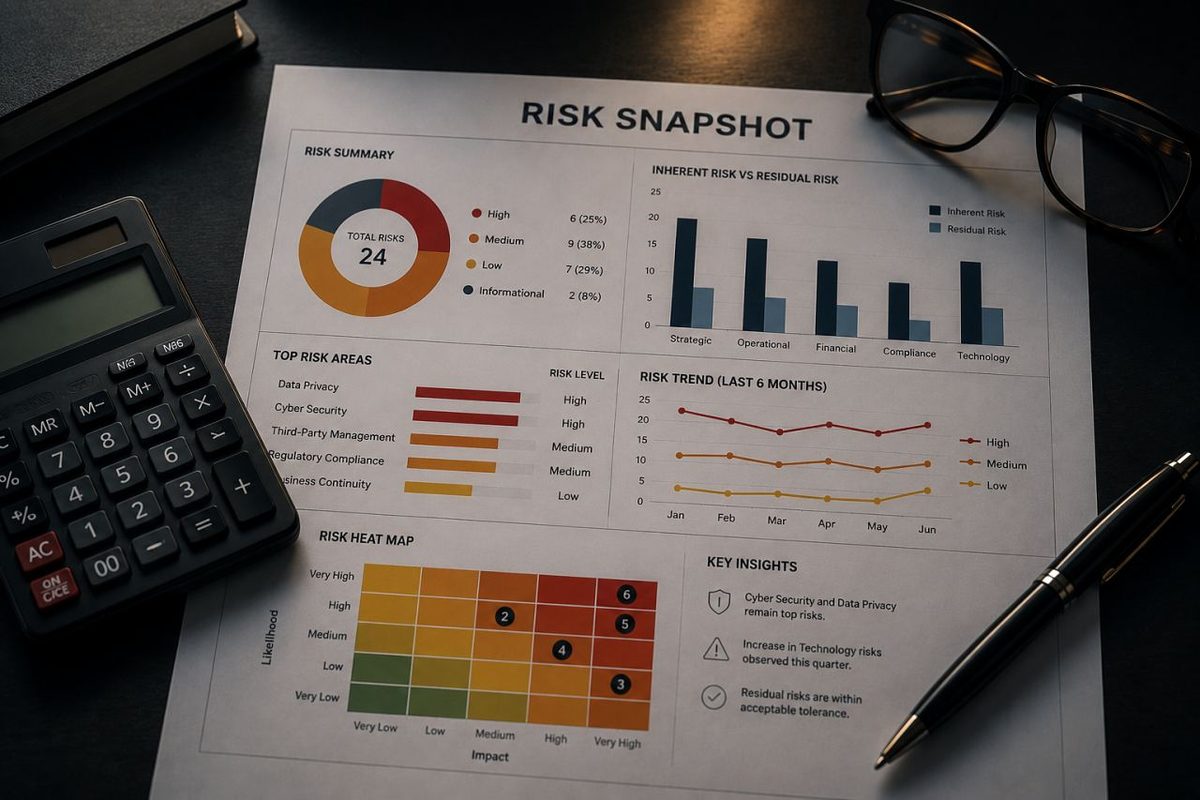
Nobody is waiting for an AI statute to look at a credit model. The Equal Credit Opportunity Act, Regulation B and the Fair Credit Reporting Act already reach it, exactly as they reach a human underwriter: by asking what the decision rested on and precisely what the applicant was told.
LENDING & CREDIT AI · INDEPENDENT AUDIT · PER RELEASE
Your AI makes credit decisions. Can you defend them?
Regulation B follows the credit decision, not the code - disparity testing, proxy analysis, and reason codes that match the model as it ran.

ECOA / Reg B
Adverse action
Disparate impact
Proxy analysis
Model risk
Our promise
“The numbers are not negotiable. That is what you are buying.”
Every finding is written against the obligation it answers - defensible line by line, to anyone who asks. The fee is fixed at $12,500, and nothing is charged until you approve it.
Request this lending AI auditThe case file
Lending AI, in three chapters
Most lenders assume their vendor’s fairness testing covers them. It rarely does: it describes the vendor’s population, not your book, your cut-offs or your overrides. Add reason codes generated from a simplified stand-in for the live model, and quiet exposure is the default outcome.
We are the independent reviewer your risk committee, partner bank and examiner mean when they ask who checked it. iDharma tests your decisions - disparity by protected class, alternative data for proxy effect, and each reason code against the live model that produced it, not a stand-in.
What counts as lending AI?
A model that decides before you do.
Anything that scores or ranks an applicant and shapes the credit decision.
- Scorecards and machine-learning underwriting models
- Pricing, line-assignment and limit-increase engines
- Fraud and identity screens that can suppress an application
- Vendor scores and third-party APIs you call at decision time
- The output changes an approval, a price or a limit
- On every decline - the notice carries the real reasons
- Whenever the model is retrained, recalibrated or re-cut
- When a partner bank or an examiner asks what you tested
Whose duty is it
The duty is yours. The model is theirs.
The creditor
ECOA and Regulation B follow the credit decision. Whoever decides to extend, price or decline the credit owes the applicant a notice with the specific principal reasons, and owes the regulator an explanation of how the decision was reached. Neither duty can be handed to somebody else.
The people who built the model
Carries no adverse-action duty to your applicant. Many vendors do genuinely careful fairness work and publish it, and a good model card is worth having. The difficulty is not its quality - it is whose applicants it was measured on, and those were never the people you declined.
When their testing helps you
A vendor's testing tells you about the vendor's population. Your own book has its own geography, its own marketing, its own cut-offs and its own overrides - and disparity is produced by all four of them. If the numbers were never run on your decisions, they say nothing about your decisions.
What most teams assume
“Our vendor tested the model, so we’re covered.”
What the rule says
The duty follows the decision, not the code.
It is the most common finding we write up.
- Who it is for
- Banks & credit unions
- Fintech lenders
- Mortgage originators
- Risk & compliance
- Model risk management
Why this matters now
Enforcement is already live

02
Model complexity is not a defence to Regulation B. A notice still owes the applicant the specific principal reasons the credit was denied.
03
Exposure runs on decisions, not on findings. It is every applicant affected, for as long as the model ran - which is arithmetic, not a fine.
04
Your partner bank asks before any regulator does. Diligence now opens with what you tested, on whose data, and who signed it.
The 60-second check
Three questions. Then you’ll know.
No email. No signup. A starting point, not a determination.
Opens in a panel. Close it any time - your answers are kept.
Lending & credit AI
Your scope check
The calendar
Four moments, and only one is a deadline.
Only the second is fixed by a rule. The other three are the moments somebody asks - and the only variable you control is whether the work was already done.
-
Test
Before launchDisparity and proxy testing before the model decides anything - after launch it is a remediation, not a design choice.
-
Notify
Within 30 daysRegulation B's clock on a completed application, and the only hard deadline here. The reasons must be the real ones.
-
Revalidate
On every changeA retrain is a new model. New weights, new cut-offs and new data all move outcomes across groups - so they move the answer.
-
Review
AnnuallyDrift is silent and cumulative. The population changes underneath a model that has not been touched, and so do its outcomes.
The trap
Teams schedule the fairness testing for after launch, and forget that the notice duty starts on the first decline. If the model goes live on the 1st, the reason codes had to be right on the 1st - and the testing that tells you whether they are had to be finished before that.
Requirement & coverage
What the rules ask, what we ship
12 obligations, and the artefact that discharges each one. Paired, so every claim on this page can be checked against the requirement beside it.
- Whose obligation it is The creditor, never the model vendor
- A written determination of who owes the duty for each decision, so a vendor's testing is never mistaken for yours.
- Reliance on vendor testing Their population is not your book
- An assessment of what your vendor's testing does and does not cover for you - and exactly what must be re-run on your own decisions.
- Specific principal reasons ECOA / Regulation B - no model-complexity exemption
- Every reason code traced back to the model as it actually ran, so the notice says what the decision was really made on.
- Adverse-action timing Within 30 days of a completed application
- A walk of the notice path end to end, including the declines your queue routes around, with the gaps named.
- Disparate impact A neutral rule can still produce a disparity
- Outcome rates and disparity ratios by protected class, for approval, pricing, line assignment and override.
- Intersectional outcomes Disparities hide on a single axis
- The full intersected grid, not one variable at a time - which is where the findings usually are.
- Proxy analysis Alternative data standing in for a protected class
- Each alternative-data feature tested for how much of a protected characteristic it carries, ranked by contribution.
- Less discriminatory alternative Whether a fairer model performs comparably
- A documented search for alternatives at comparable performance, and the record of what was tried and rejected.
- Data provenance FCRA permissible purpose, and the right to use it
- Where each input came from, on what basis you hold it, and what bias it brings in with it.
- Model documentation SR 11-7 practice for supervised institutions
- An inventory entry per model: owner, purpose, limitations, change history, and who signed each change off.
- Independent validation Effective challenge from outside the build team
- A validation by people with no role in building, selling or operating the model - and no fee tied to the finding.
- Ongoing monitoring Drift, overrides and the population underneath
- The monitoring you have, the monitoring you need, and the thresholds that should trigger a human looking at it.
The engagement
Lending AI, independently audited
From a scorecard to a vendor API.
-
Request and scope
Which models, which decisions, which book. Priced and approved before anything is charged.
-
Test
Disparity across protected classes, proxy analysis, reason codes, documentation. One to four weeks.
-
Sign off and report
You see the draft first. Then the report, the tables and the shortlist - dated and signed.

Struck in your favour
Why lenders choose iDharma to review their models
Genuinely independent
We build, resell and score no credit models, and we take no fee tied to what the audit finds.
Written to the obligation
Every finding maps to the rule it answers, so your counsel checks it against the rule itself.
One engagement, end to end
Fairness, reasons, data and governance in one scope, so nothing falls between two reviewers.
Proxy analysis by default
Alternative data is tested for proxy effect in the base scope, not sold on - it is where findings are.
Four marks, struck on every report.
Deliverables
What you get
Concrete artefacts, each with a name and a format - you know what lands before you buy.
Fair-lending audit report
The full review: method, data sources, every disparity figure, and the findings written in language your risk committee can act on - approval, pricing, line-assignment and override outcomes by protected class and by the classes intersected, each alternative-data feature scored for proxy effect, and every reason code traced to the model that produced it.
Signed by a named independent reviewer with no role in building, selling or operating the model, and no fee tied to the finding. Written so a partner bank, an examiner or your own board can read it without a translator.
Disparity tables
The underlying rates and ratios in a workbook, so your own analysts can reproduce every figure in the report, cell by cell, without asking us.
Adverse-action review
Each reason code checked against what the model actually weighed for that decision, with the codes that cannot be substantiated named individually.
Proxy analysis
Every alternative-data feature ranked by how much of a protected characteristic it carries, with the ones worth removing or replacing called out.
Model documentation review
What your inventory records against what the model does, with the gaps a validator or an examiner would open the conversation with, listed.
Remediation shortlist
Where the numbers point to a problem, what to look at first, and why. Ranked by consequence to borrowers, not by which fix is easiest to ship.
Vendor-model assessment
What your vendor's testing covers for your book and what it does not - and exactly which figures have to be re-run on your own decisions.
Format & fee
Real numbers, upfront.
- Scope
- Agreed with you, then fixed
- Data
- Your own decision records
- Re-review
- On every material retrain - $8,000 against your known baseline
One fixed fee for the whole audit, each extra system priced up front by the same table - and nothing is charged until you have approved it.
Request a lending AI audit
Lending AI · Fixed price
$12,500
- Independent fair-lending review
- Disparity by protected class, intersected
- Proxy analysis on alternative data
- Adverse-action reason substantiation
Show your hand
Four things you have to be able to produce
Fair lending is not graded on intent. Each of these is either in your hand on the day somebody asks, or it is not.
The reasons,
specific
The principal reasons this applicant was declined, reproducible from the model that declined them. A checklist reason is the one an examiner reads as an admission.
The testing,
dated
Fair-lending testing on your own decisions, carrying the date it was run and the version of the model it was run against. Testing without a version is testing of nothing.
The record,
complete
What the model is for, what it may not be used for, what changed, when, and who approved it. The change nobody wrote down is the one the question will be about.
The numbers,
by group
Approval, pricing and override outcomes by protected class and by the classes intersected. The table is the evidence; a fairness score is not the same thing.
Four cards, and the date on each one is part of the card.
Our vendor scores the applications. Are we still on the hook?
Yes. ECOA and Regulation B follow the credit decision, not the code. Their testing describes their population; your approvals, your pricing and your overrides are what a regulator will ask about.
What counts as a lending AI model here?
Anything that scores, ranks or classifies an applicant and shapes the credit decision - a scorecard, an ML underwriting model, a pricing engine, a fraud screen or a vendor API. The test is what the output does to the decision.
What exactly do you test?
Outcome disparity by protected class and by classes intersected, alternative data for proxy effect, whether reason codes match the model as it ran, data provenance, and the documentation and monitoring behind it.
How long does it take, and what does it cost?
One to four weeks for most engagements. The scope and the price are agreed and approved before any work begins, and nothing is charged until you approve what the engagement covers.
What happens if we get this wrong?
Fair-lending exposure is not a fixed fine. It runs on the decisions - every applicant affected, for as long as the model ran - and reaches restitution, model changes under supervision, and the referral that follows.
Get started
Operating AI in lending, credit or underwriting?
Tell us what decides, and we come back with a scope and a price within one business day.

What we need from you
Nothing you do not already have. Most of this is an extract of your decision records and a folder your model owner assembles in an afternoon, named in writing first.
- Which models decide, and at which stage
- Whether they are built in-house, bought, or both
- Decision records for the period, with outcomes
- Any fairness testing already done, and by whom
- Your target date for a read, if you have one
What happens next
- You send the five items we need.
- We call to scope it within one business day.
- Nothing is charged until you approve the scope.
Sources & standing
Where this page gets its facts
Where the claims on this page come from, and what they are worth - stated, not assumed.
What it is drawn from
- ECOA & Regulation B, 12 CFR 1002
- FCRA; Fair Housing Act; SR 11-7
- Applies to
- Credit decisions today
- Last read
- 9 September 2026
What it means
- General information about what these rules require - not legal advice, and no professional relationship arises from reading it. It determines nothing about your own models.
- Where a fair-lending question is genuinely arguable, our reports say so rather than pick the convenient answer.
Scope & limitation
- Do not rest a binding decision on it; engage qualified counsel.
- Use it as a starting point for a scoping conversation, not as your final word.
- Whether a disparity is a legal problem turns on your product, your market and what a comparably performing alternative would have done - none of which a web page can see.
Something on this page out of date?
Tell usFrom Insights
Related reading
AI Model Risk Management for Lenders: What Counterparties Ask For
Partner banks, examiners and enterprise counterparties converge on four questions about AI in credit. What each one is really testing, and what an honest answer looks like.
Read the guide
METHODOLOGY NOTES
How to Prepare for an AI Audit: The Readiness Checklist
Six things to have ready before the engagement starts. Assembling them takes a fortnight off the clock — and tends to find the first two findings before an auditor does.
METHODOLOGY NOTES
What Is an AI Audit? Scope, Standards, and What You Get
An independent review of what your AI actually does, measured against a named standard — not a certificate, and not a review of what the documentation says it does.
STANDARDS EXPLAINED
What an AI Governance Framework Actually Contains
Five working parts, not a policy document. What each one has to do, how to tell whether yours is real, and why a framework is not the same thing as compliance.